Buy qhm.eu ?
We are moving the project
qhm.eu .
Are you interested in purchasing the domain
qhm.eu ?
domain@kv-gmbh.de · 0541-91531010
Buy qhm.eu ?
What is Descartes' dualism?
Descartes' dualism is the philosophical concept that the mind and body are two distinct and separate entities. He argued that the mind (or soul) is non-physical and immortal, while the body is physical and mortal. This dualism suggests that the mind and body interact with each other, but they are fundamentally different in nature. Descartes' dualism has had a significant impact on the philosophy of mind and has been influential in shaping the modern understanding of the mind-body problem. **
What does Descartes understand by thinking?
Descartes understands thinking as the mental process of consciousness and self-awareness. He believes that thinking is the essence of human existence, as expressed in his famous statement "Cogito, ergo sum" (I think, therefore I am). For Descartes, thinking encompasses not only rational thought and logical reasoning but also emotions, sensations, and perceptions. Thinking, in Descartes' view, is the foundation of knowledge and the basis for understanding the world and oneself. **


Similar search terms for Descartes
Top-Angebote
Products related to Descartes:
-
Lush Living Finds Perforated Brick Assembly Toy Accessories With Technology Mechanical Wheels Perforated Brick Assembly Toy Accessories With Technology Mechanical WheelsEnhance Creativity with Technology Mechanical Wheels Unlock the power of innovation with our technology mechanical wheels, designed specifically for perforated brick assembly toy accessories. Whether you are a hobbyist or a seasoned builder, these...43,97 $*Shipping: 0,00 $Secure redirect to the provider
-
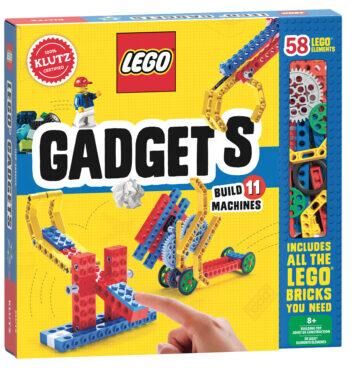
Klutz: LEGO GadgetsThis activity kit will have you building 11 machines including a gravity powered car and a wacky boxing robot. The fun doesn't stop once you've completed all of the projects in the book - open-ended prompts will inspire you to continue experimenting...24,99 $*Shipping: 0,00 $Secure redirect to the provider
-
iFixit Essential Electronics ToolkitThe iFixit Essential Electronics Toolkit is a compact starter repair kit for phones, tablets, laptops, game consoles and other small electronics. It includes a precision bit driver with 16 precision bits plus the basic opening and prying tools needed for common repairs such as screen and battery replacements.40,99 £*Shipping: 0,00 £Secure redirect to the provider
-
Multisell Products Hub Magnetic Bottle Opener For Household Mineral Water Plastic Beverage Bottles And Cap Opening, Kitchen Accessories Gadgets whiteEffortless Cap Opening for Everyday Kitchens Upgrade your routine with this 1 pcs Kitchen Accessories Gadgets Magnetic Bottle Opener for Household Mineral Water Plastic Beverage Bottles and Cap Opening designed for convenience and comfort. It makes...34,97 $*Shipping: 0,00 $Secure redirect to the provider



-
Is René Descartes a deceiving god?
No, René Descartes did not believe himself to be a deceiving god. In his Meditations on First Philosophy, Descartes introduces the concept of a deceiving god as a thought experiment to explore the limits of human knowledge and the possibility of doubt. He uses this idea to demonstrate the need for a method of doubt and skepticism in order to arrive at certain knowledge. Descartes ultimately concludes that God is not a deceiver and that clear and distinct perceptions can serve as a foundation for knowledge. Therefore, Descartes does not present himself as a deceiving god, but rather uses the concept as a tool for philosophical inquiry. **
-
What is Descartes' conception of God?
Descartes' conception of God is that of a perfect, infinite, and all-powerful being. He argues that the idea of God is innate in humans and that God is the guarantor of the truth of all clear and distinct ideas. Descartes also believes that God is the creator of the universe and that his existence can be proven through the ontological argument. Overall, Descartes' conception of God is central to his philosophy, serving as the foundation for his epistemological and metaphysical beliefs. **
-
What is known about René Descartes?
René Descartes was a French philosopher, mathematician, and scientist who is often referred to as the "Father of Modern Philosophy." He is best known for his statement "Cogito, ergo sum" (I think, therefore I am), which became a foundational element of Western philosophy. Descartes made significant contributions to the fields of mathematics, particularly in the development of analytic geometry. He also wrote extensively on metaphysics, epistemology, and the nature of the mind-body relationship. Descartes' work had a profound impact on the development of modern philosophy and science. **
-
What is Descartes' theory of knowledge?
Descartes' theory of knowledge is based on the idea of radical doubt and the search for certainty. He famously stated "Cogito, ergo sum" (I think, therefore I am), which serves as the foundation of his epistemology. Descartes sought to establish a secure foundation for knowledge by doubting everything that could possibly be doubted, and then building his knowledge from the ground up based on clear and distinct ideas. He believed that true knowledge could only be obtained through reason and rationality, and that sensory experience could be deceiving. Ultimately, Descartes' theory of knowledge emphasizes the importance of skepticism, reason, and the search for indubitable truths. **


What is René Descartes' view on philosophy?
René Descartes believed that philosophy should be based on reason and skepticism, rather than relying on tradition or authority. He emphasized the importance of doubt and critical thinking in order to arrive at certain knowledge. Descartes is known for his method of doubt, where he sought to doubt everything that could be doubted in order to find a foundation of knowledge that could not be doubted. Overall, Descartes' view on philosophy can be summarized as a rational and methodical approach to seeking truth and certainty. **
What is the meaning of Descartes' meditations?
Descartes' meditations are a series of philosophical reflections on the nature of knowledge, reality, and the self. In these meditations, Descartes seeks to establish a foundation for knowledge that is certain and indubitable. He famously begins by doubting everything he has been taught and even the existence of the external world, in order to arrive at a truth that cannot be doubted. Ultimately, Descartes' meditations aim to establish a secure foundation for knowledge and to prove the existence of God and the immortality of the soul. **
Top-Angebote
Products related to Descartes:
-
Balta Rugs Descartes Abstract Modern Area RugPlush and ultra-soft, this luxurious and trendy collection brings the perfect amount of comfort and design to any space. The supple, smooth low pile, provides the perfect fashion forward addition to any space.170,93 $*Shipping: 0,00 $Secure redirect to the provider
-
Borough Wharf Descartes 70cm Sideboard Black 80cm H X 70cm W X 30cm DThis classic sideboard is meant to make a decorative and practical addition to your home. Durable material: The engineered wood is of exceptional quality with smooth surface and also features strength, stability and resistance to moisture. Made of engineered wood, the sideboard cabinet is easy to clean with a damp cloth.Sufficient storage space: This side cabinet offers ample storage space for keeping various daily essentials well organised and within easy reach.Sturdy top: The storage cabinet features a sturdy top that can be used to display decorative objects such as photo frames or potted plants.Adjustable feet: Four adjustable feet with plastic pads keep the storage furniture balanced on uneven ground and increase stability. Warning:To prevent it being overturned, this product must be used with the provided wall attachment device. Borough Wharf107,99 £*Shipping: 0,00 £Secure redirect to the provider
-
Lush Living Finds Perforated Brick Assembly Toy Accessories With Technology Mechanical Wheels Perforated Brick Assembly Toy Accessories With Technology Mechanical WheelsEnhance Creativity with Technology Mechanical Wheels Unlock the power of innovation with our technology mechanical wheels, designed specifically for perforated brick assembly toy accessories. Whether you are a hobbyist or a seasoned builder, these...43,97 $*Shipping: 0,00 $Secure redirect to the provider
-
Klutz: LEGO GadgetsThis activity kit will have you building 11 machines including a gravity powered car and a wacky boxing robot. The fun doesn't stop once you've completed all of the projects in the book - open-ended prompts will inspire you to continue experimenting...24,99 $*Shipping: 0,00 $Secure redirect to the provider
-
What is Descartes' dualism?
Descartes' dualism is the philosophical concept that the mind and body are two distinct and separate entities. He argued that the mind (or soul) is non-physical and immortal, while the body is physical and mortal. This dualism suggests that the mind and body interact with each other, but they are fundamentally different in nature. Descartes' dualism has had a significant impact on the philosophy of mind and has been influential in shaping the modern understanding of the mind-body problem. **
-
What does Descartes understand by thinking?
Descartes understands thinking as the mental process of consciousness and self-awareness. He believes that thinking is the essence of human existence, as expressed in his famous statement "Cogito, ergo sum" (I think, therefore I am). For Descartes, thinking encompasses not only rational thought and logical reasoning but also emotions, sensations, and perceptions. Thinking, in Descartes' view, is the foundation of knowledge and the basis for understanding the world and oneself. **
-
Is René Descartes a deceiving god?
No, René Descartes did not believe himself to be a deceiving god. In his Meditations on First Philosophy, Descartes introduces the concept of a deceiving god as a thought experiment to explore the limits of human knowledge and the possibility of doubt. He uses this idea to demonstrate the need for a method of doubt and skepticism in order to arrive at certain knowledge. Descartes ultimately concludes that God is not a deceiver and that clear and distinct perceptions can serve as a foundation for knowledge. Therefore, Descartes does not present himself as a deceiving god, but rather uses the concept as a tool for philosophical inquiry. **
-
What is Descartes' conception of God?
Descartes' conception of God is that of a perfect, infinite, and all-powerful being. He argues that the idea of God is innate in humans and that God is the guarantor of the truth of all clear and distinct ideas. Descartes also believes that God is the creator of the universe and that his existence can be proven through the ontological argument. Overall, Descartes' conception of God is central to his philosophy, serving as the foundation for his epistemological and metaphysical beliefs. **
Similar search terms for Descartes
-
iFixit Essential Electronics ToolkitThe iFixit Essential Electronics Toolkit is a compact starter repair kit for phones, tablets, laptops, game consoles and other small electronics. It includes a precision bit driver with 16 precision bits plus the basic opening and prying tools needed for common repairs such as screen and battery replacements.40,99 £*Shipping: 0,00 £Secure redirect to the provider
-
Multisell Products Hub Magnetic Bottle Opener For Household Mineral Water Plastic Beverage Bottles And Cap Opening, Kitchen Accessories Gadgets whiteEffortless Cap Opening for Everyday Kitchens Upgrade your routine with this 1 pcs Kitchen Accessories Gadgets Magnetic Bottle Opener for Household Mineral Water Plastic Beverage Bottles and Cap Opening designed for convenience and comfort. It makes...34,97 $*Shipping: 0,00 $Secure redirect to the provider
-
HARPERCOLLINS Creative Confidence by Tom & David Kelley – Unleashing Your Creative Potential & Innovation MindsetA powerful and inspiring book from the founders of IDEO, the award-winning design firm, on unleashing the creativity that lies within each and every one of us. Too often, companies and individuals assume that creativity and innovation are the domain of the ‘creative types’. But two of the foremost experts in innovation, design and creativity on the planet show us that each and every one of us is creative. In an entertaining and inspiring narrative that draws on countless stories from their work at IDEO, and with many of the world's top companies and design firms, David and Tom Kelley identify the principles and strategies that will allow us to tap into our creative potential in our work lives, and in our personal lives, allow us to think outside the box in terms of how we approach and solve problems. ‘Creative Confidence’ is a book that will help each of us be more productive and successful in our lives and in our careers.4,95 £*Shipping: 1,99 £Secure redirect to the provider
-
Balta Rugs Descartes Abstract Modern Area RugPlush and ultra-soft, this luxurious and trendy collection brings the perfect amount of comfort and design to any space. The supple, smooth low pile, provides the perfect fashion forward addition to any space.486,37 $*Shipping: 0,00 $Secure redirect to the provider
-
What is known about René Descartes?
René Descartes was a French philosopher, mathematician, and scientist who is often referred to as the "Father of Modern Philosophy." He is best known for his statement "Cogito, ergo sum" (I think, therefore I am), which became a foundational element of Western philosophy. Descartes made significant contributions to the fields of mathematics, particularly in the development of analytic geometry. He also wrote extensively on metaphysics, epistemology, and the nature of the mind-body relationship. Descartes' work had a profound impact on the development of modern philosophy and science. **
-
What is Descartes' theory of knowledge?
Descartes' theory of knowledge is based on the idea of radical doubt and the search for certainty. He famously stated "Cogito, ergo sum" (I think, therefore I am), which serves as the foundation of his epistemology. Descartes sought to establish a secure foundation for knowledge by doubting everything that could possibly be doubted, and then building his knowledge from the ground up based on clear and distinct ideas. He believed that true knowledge could only be obtained through reason and rationality, and that sensory experience could be deceiving. Ultimately, Descartes' theory of knowledge emphasizes the importance of skepticism, reason, and the search for indubitable truths. **
-
What is René Descartes' view on philosophy?
René Descartes believed that philosophy should be based on reason and skepticism, rather than relying on tradition or authority. He emphasized the importance of doubt and critical thinking in order to arrive at certain knowledge. Descartes is known for his method of doubt, where he sought to doubt everything that could be doubted in order to find a foundation of knowledge that could not be doubted. Overall, Descartes' view on philosophy can be summarized as a rational and methodical approach to seeking truth and certainty. **
-
What is the meaning of Descartes' meditations?
Descartes' meditations are a series of philosophical reflections on the nature of knowledge, reality, and the self. In these meditations, Descartes seeks to establish a foundation for knowledge that is certain and indubitable. He famously begins by doubting everything he has been taught and even the existence of the external world, in order to arrive at a truth that cannot be doubted. Ultimately, Descartes' meditations aim to establish a secure foundation for knowledge and to prove the existence of God and the immortality of the soul. **
* All prices are inclusive of VAT and, if applicable, plus shipping costs. The offer information is based on the details provided by the respective shop and is updated through automated processes. Real-time updates do not occur, so deviations can occur in individual cases. ** Note: Parts of this content were created by AI.